Journal
Do I Need an Interior Designer for My Renovation?
When a designer is worth it, when they're not, and how to tell which side of the line your Perth renovation sits on. An honest guide.
If you're planning a renovation in Perth, this is usually one of the first questions that comes up. And the honest answer is: it depends.
Not every renovation needs an interior designer. Some projects are simple enough, or small enough, that hiring one would be over the top. Others are the kind of project where not hiring one is the single most expensive decision you can make.
This post is here to help you tell the difference.
What an interior designer actually does
There's a common assumption that interior designers pick paint colours and choose cushions. We do that work too, but it's only one part of what we do.
For a residential renovation, a designer's role is to lead the design phase of the project before construction begins. That means resolving the layout, the joinery, the materials, the fixtures, the finishes, and the lighting. It means producing the documentation your builder needs to price the job accurately and execute it confidently. And it means coordinating with your architect and your trades so the hundreds of decisions involved in a renovation happen in the right order, with the right information.
It's not styling. It's design leadership.
That distinction matters because it changes the answer to the question. Hiring someone to pick tiles is one thing. Hiring someone to lead the design phase of a project that might involve six figures of construction is a different thing entirely.
When a designer isn't necessary
A few scenarios where you probably don't need one:
You're doing a cosmetic refresh on a small budget. New paint, new carpet, maybe a few new pieces of furniture. If the bones of the home are working and you're not changing layout or joinery, a designer is likely over-specified for the job.
The project is genuinely simple. Replacing a bathroom vanity with the same size vanity in the same location. Adding a built-in wardrobe to an existing bedroom. Single-room cosmetic work where there are no real design decisions to make.
You already have strong design instincts and the time to apply them. Some people are genuinely good at this work. If you've done renovations before, you know what you like, you can read a plan, and you have time to project-manage the decisions, you can do it yourself.
Your builder is also a designer. Some Perth builders have in-house design capability and offer it as part of the build package. For simpler projects, this can work well.
If any of these apply, save your money. A designer isn't going to add enough value to justify the fee.
When a designer is genuinely worth it
These are the situations where hiring a designer changes the outcome of the project, not just the look of it.
You're doing a full home renovation or new build. The number of decisions involved in a whole-home project is in the hundreds. Layout, structure, joinery in every room, finishes throughout, fixtures, lighting, materials, flooring, paint, window treatments. These decisions need to happen in a specific order, with the right information, before construction starts. Trying to manage that alongside a job and a life almost always ends one of two ways: decisions get made too quickly on site under pressure, or the project stalls while you try to catch up.
The project involves significant joinery. Kitchens, custom cabinetry, built-in storage, wardrobes. Joinery is where the most expensive design mistakes happen, because it's costly to change once it's built. A designer thinks about storage, layout, proportion, and material choice before any of it gets fabricated.
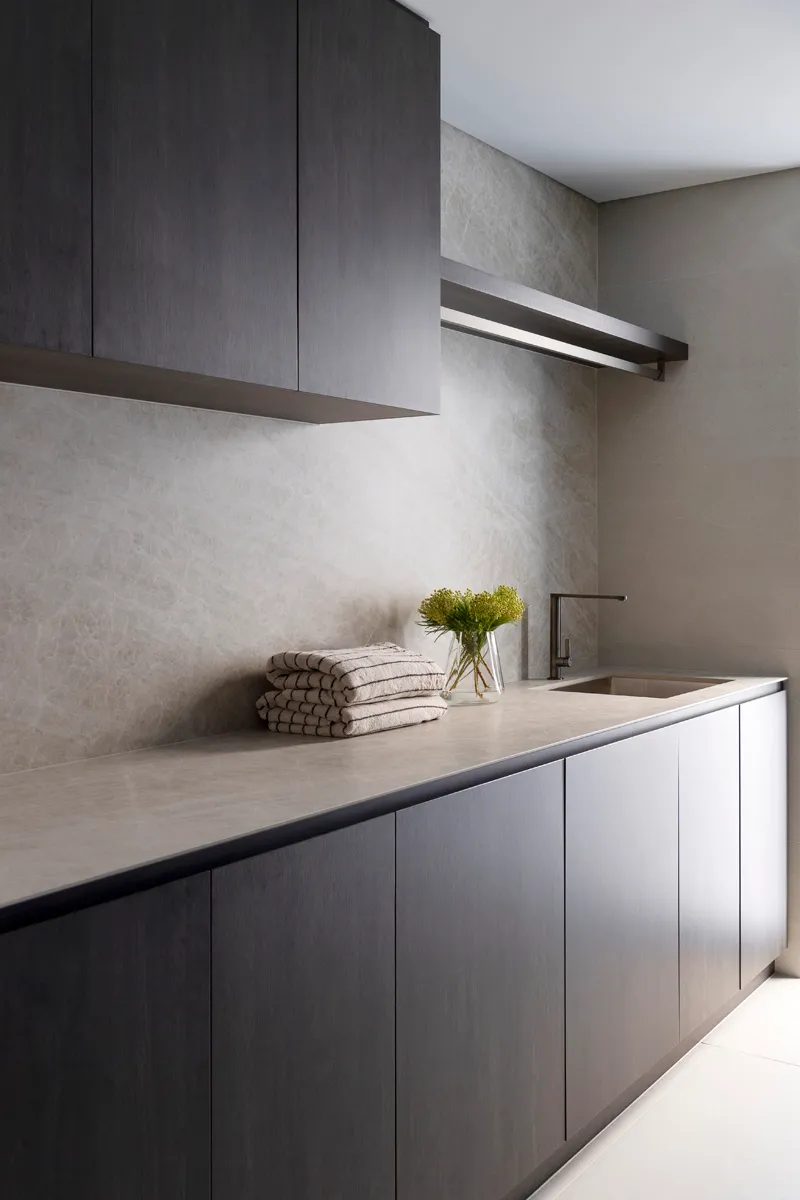
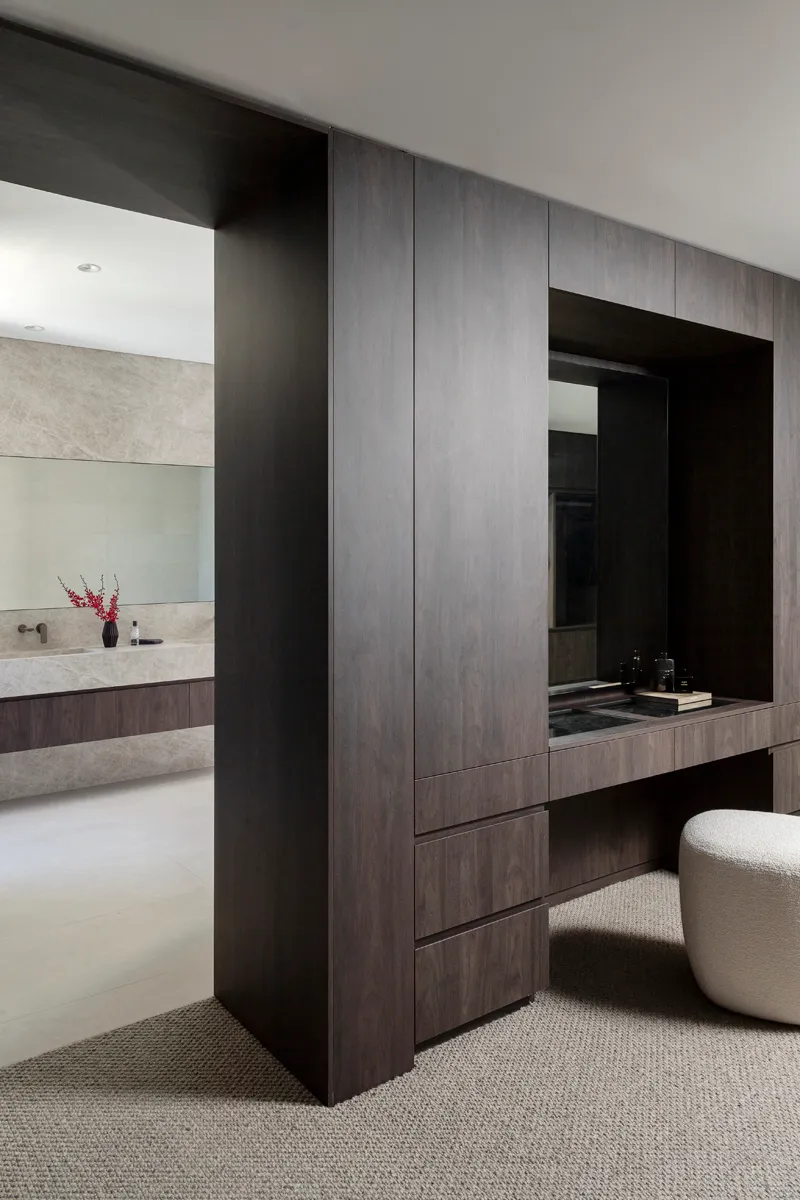
The budget is significant enough that getting it wrong is expensive. If you're spending $400,000 or more on construction, the cost of design fees is small relative to the cost of variations, mistakes, and decisions made on the fly during the build. A well-resolved design phase usually saves more than it costs.
You don't have the time, the experience, or the inclination to project-manage the design. Renovation design is a specialised job. Trying to do it yourself while running a household and a career often results in a finished home that doesn't quite work.
You want a home that's cohesive across every space. A common pattern with self-managed renovations is that each room gets designed in isolation, often by different people (the kitchen by the cabinetmaker, the bathroom by the tiler, the wardrobes by the builder). The result is a series of nice rooms that don't talk to each other. A designer holds the whole picture so the home comes together as one.
What hiring a designer actually saves you
Beyond the design itself, there are three practical things a designer prevents.
Costly variations during construction. A variation is what happens when something on site needs to change after the build has started. Variations are slow and expensive. Most variations happen because the design wasn't fully resolved before construction began. A designer's job is to make sure every decision is made on paper, in the right order, before a single tile is laid.
Decisions made under time pressure. When a builder is waiting on a tiling choice or a tap finish, the pressure to decide quickly is enormous. People often end up with finishes they don't love because they had to pick something. A designer makes these decisions calmly, in the design phase, when there's time to consider them properly.
A home that doesn't quite work. This is the hardest one to quantify. A space that looks fine in photos but feels off in person. A kitchen that's beautiful but awkward to cook in. A laundry that's the wrong size for the way the family actually uses it. These problems usually trace back to a layout decision made without enough thinking. They're permanent and they're frustrating.
How to decide
A simple way to think about it:
Add up your construction budget. If it's under $50,000 and the project is largely cosmetic, you probably don't need a designer.
If it's between $50,000 and $200,000 and involves changes to layout, joinery, or fixtures, a designer makes sense for the spaces where the most design decisions are happening.
If it's over $400,000 and you're renovating or building a whole home, the question isn't really whether to hire a designer. It's which one, and how early to engage them.
The earlier the better. Most clients come to us three to six months before they expect to break ground, which is the ideal window. By then you've had time to think about what you want, but you haven't locked in decisions that are hard to undo.
If you've read this far and you're not sure where your project sits, the cost question is often the next one to look at. We've written about what an interior designer costs in Perth in a separate post.
And if you'd rather talk it through, book a consultation with us.