Journal
Designing Your Home for the Perth Sun
How to design a Perth home that works with the west sun instead of fighting it: orientation, shading, glass, curtains and materials that cope.
Perth has some of the most beautiful light in the world. Clear skies, long summers and that soft gold in the late afternoon.
It also has the west sun.
Anyone who has sat in a west facing living room on a February afternoon knows exactly what I mean. The glare, the heat, the blinds pulled down at four o'clock just so you can see the television. A room that should be the best in the house becomes the one nobody wants to use.
Designing for the Perth sun is not about shutting the light out. It is about deciding where you want it, when you want it, and how much.
Start with orientation
In the southern hemisphere, north is your friend.
North facing living areas get the sun high in the sky through summer, which is easy to shade with eaves, and low winter sun that reaches deep into the room when you actually want the warmth. East light is gentle and lovely in the morning. South light is soft and even all day, which is why artists have always loved it.
West is the difficult one. The afternoon sun sits low, comes in almost horizontally, and arrives at the hottest part of the day. Eaves barely touch it.
If you are building new, or reworking a floor plan in a renovation, this is the first thing I look at. Where do the main living areas sit? Where does the family spend late afternoons? Can the rooms that face west be the ones you use least at that time of day, like a laundry, garage, bathroom or robe?
In a renovation you cannot turn the house around. But you can often change which rooms do what, and that can make a bigger difference than any blind.
Shade outside before you shade inside
This is the single most useful thing I can tell you about heat.
Once the sun has passed through the glass, most of the heat is already inside the room. Internal blinds and curtains help with glare and privacy, but they are fighting the heat after it has arrived.
External shading stops it before it reaches the window. Deep eaves, pergolas, awnings, louvres, external screens and well placed trees all do this, and on a west facing wall they can be the difference between a usable room and an oven.
Deciduous trees and climbers are worth a mention, because they do something clever. They shade in summer and drop their leaves in winter, letting the sun back in exactly when you want it.
Glass matters more than people think
Windows are where most of the heat in a home comes and goes, so the glass itself is worth a proper conversation.
Double glazing and performance glass, including low emissivity or tinted options, reduce how much heat comes through, and they make the room near the window far more comfortable to sit in. They also help in winter, holding warmth in on those cold Perth mornings that newcomers never quite believe until they have lived here.
Size and placement matter too. A huge west facing window might look wonderful on the plans. Ask whether a narrower window, a highlight window, or glass that faces a shaded courtyard would give you the view and the light without the heat.
Window furnishings that work
Inside, I nearly always layer.
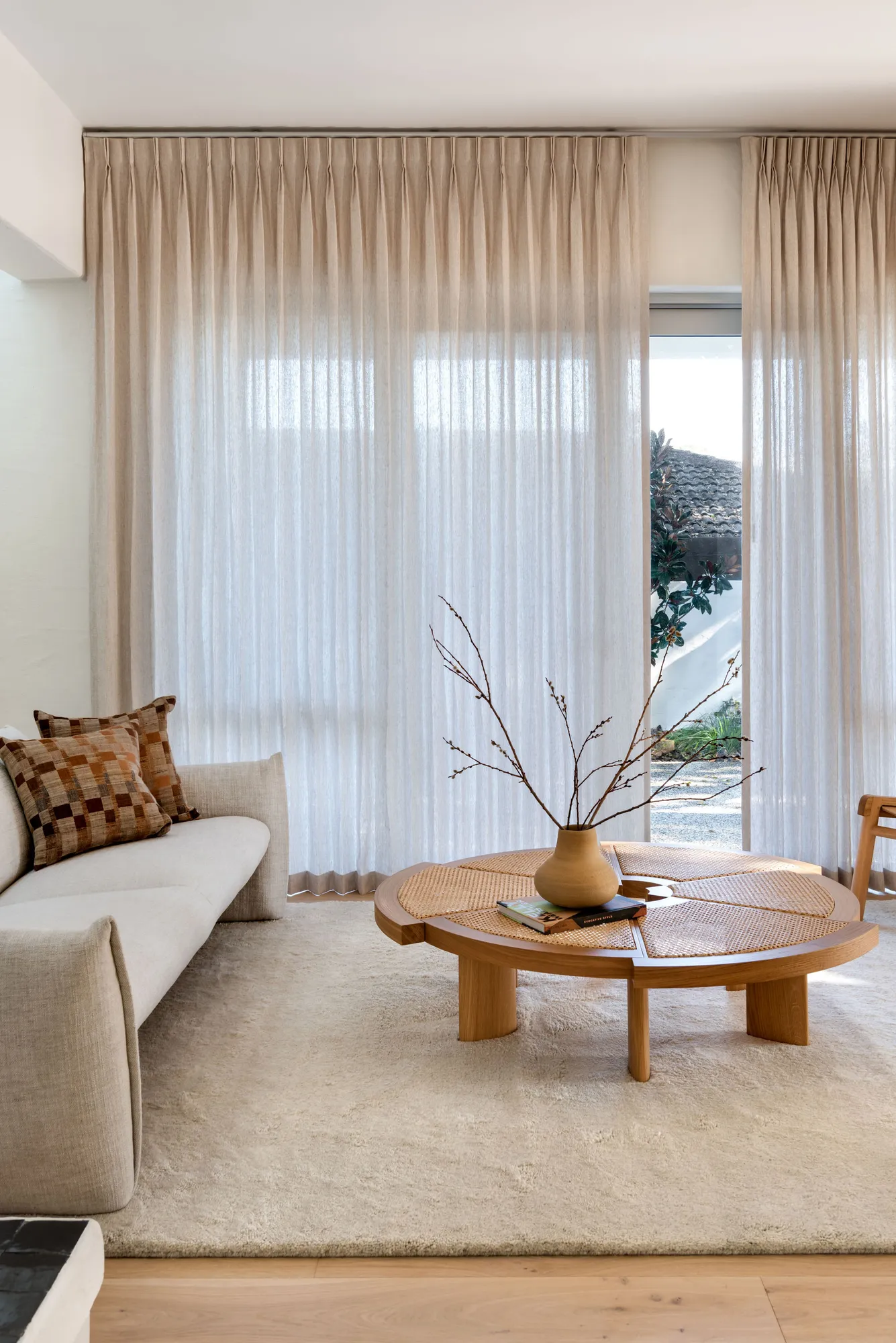
Full height linen sheers are my starting point in most Perth homes. They soften the glare, diffuse the light beautifully, keep a sense of privacy during the day, and they still let the room breathe. Hung from a ceiling track or a recessed pelmet, from floor to ceiling, they also make a room feel taller and calmer.
Behind them, a block out or light filtering layer for bedrooms, media rooms and anywhere the afternoon sun is relentless. In living areas facing west, a good quality blind or a second, heavier curtain gives you control on the worst days without living in the dark the rest of the year.
The trick is to plan the tracks, pelmets and any motorisation before the ceilings go up. Curtains are often treated as a finishing touch. In a well designed home, they are part of the architecture.
Choose materials that cope
The Perth sun is hard on finishes, and some materials handle it better than others.
Timber floors will change colour over time in strong light. Lighter timbers tend to deepen, darker timbers can fade and bleach. Rugs, furniture and sheers all slow this down, but it is worth expecting rather than being surprised by it.
Fabrics fade, especially strong colours and natural fibres in direct sun. I choose upholstery for sunny rooms with this in mind, and keep the most precious pieces out of the direct path of the afternoon light.
Dark surfaces absorb heat. A dark stone floor in full sun can be surprisingly warm underfoot, and a black benchtop near a west window will feel it too. That does not mean you cannot have them. It means thinking about where they go.
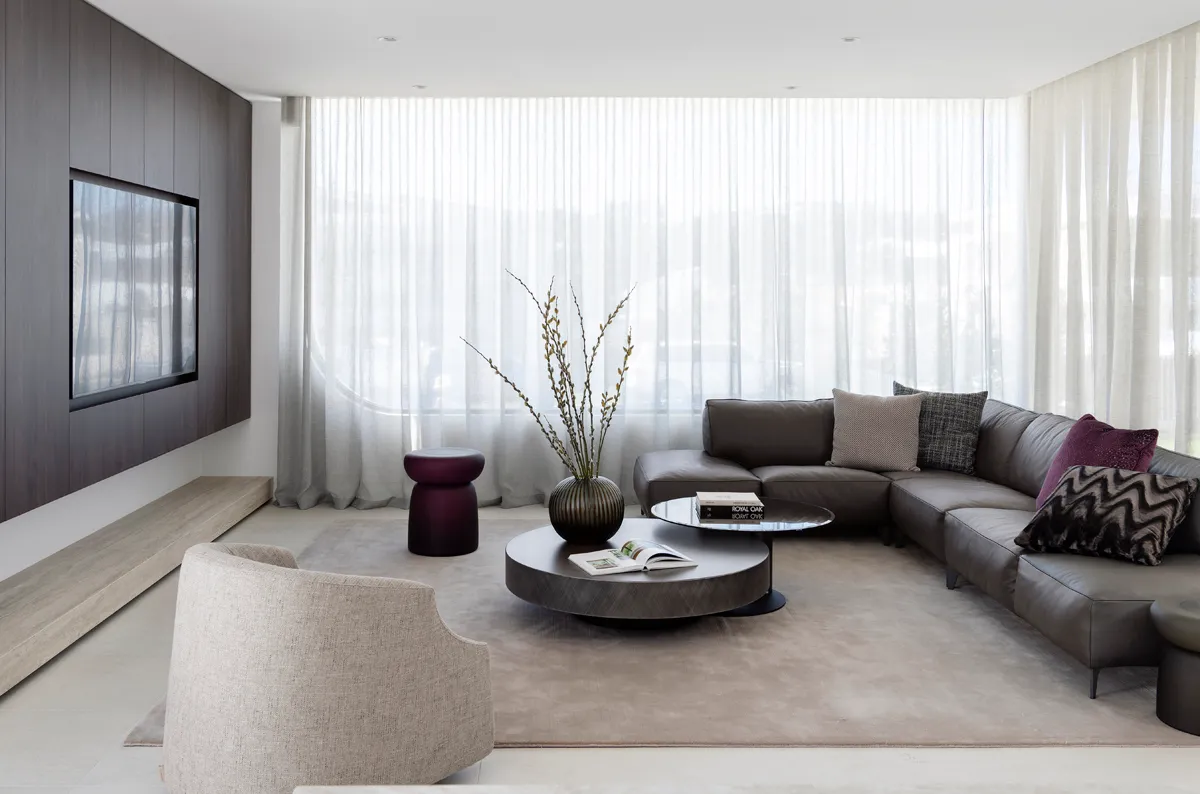
Pale, natural materials, like soft limestone, light timber, textured plaster and linen, reflect light and stay calmer in our climate. It is part of why that relaxed, layered coastal palette suits Perth so well.
Let the house breathe
One of the great things about Perth is the afternoon sea breeze. Locals call it the Fremantle Doctor, and on a hot day it arrives like a gift.
A home that can catch it stays cooler without the air conditioning running all afternoon. That means windows and doors placed on opposite sides of the house so air can flow through, openable highlight windows that let warm air escape, and sliding doors that open wide to the garden.
It is a simple idea that gets lost surprisingly often, particularly in renovations where walls have been added and rooms closed off over the decades.
Glare and screens
There is a less obvious side to Perth light, and that is glare.
Strong light bouncing off a pool, white paving or a neighbour's roof can make a room uncomfortable even when it is not hot. It also makes it hard to see a television or a laptop screen.
When I plan a living room, I look at where the screen sits in relation to the windows. A television on the wall opposite a large window will be fighting reflections all afternoon. Moving it ninety degrees can solve a problem that no blind ever will.
Where a designer fits
The Perth sun is not something to work around at the end. It shapes where the rooms go, how big the windows are, which materials suit which spaces and how the curtains are built in.
That is the thinking behind every home I design. It is the difference between a house that looks beautiful in photographs and one that is genuinely comfortable to live in at four o'clock in February. If you are just starting out, my guide on how to plan a home renovation in Perth walks through the order these decisions should happen in.
If you have a room that is unbearable in summer, or you are planning a home and want to get the light right from the beginning, let's talk.