Journal
How to Prepare for Your Pre-Start Appointment
You have signed the contract, and now hundreds of selections need locking in over a few hours. An honest guide to your pre-start appointment: what it really decides, what to sort out before you go, and the choices people most often come to regret.
How to Prepare for Your Pre-Start Appointment
You have signed the building contract. Somewhere in the paperwork is a date for your pre-start appointment, and a cheerful note that this is where your new home really takes shape. Then the pack of selection forms arrives, and it stops feeling cheerful. Flooring, tiles, cabinetry, benchtops, tapware, power points, lighting. Hundreds of decisions, most of them things you have never had to think about before, and a showroom appointment of a few hours to lock them all in.
If that feels like a lot, it is. Pre-start is one of the most consequential days in the whole build, and most people walk into it underprepared, not because they are careless, but because nobody told them what it actually asks of them.
Here is how to walk in ready.
What pre-start actually is
Pre-start is the appointment where you finalise the selections that go into your new home before construction begins. In Western Australia most project builders run it as one longer session, sometimes split across a couple of visits, usually at their own selection studio or a supplier showroom.
By the end of it you will have chosen your floor coverings, your tiles, your cabinetry colours and finishes, your benchtops, your tapware and sanitaryware, your paint, and the position of every power point, light and data point in the house. Once those forms are signed, they become the instructions your builder hands to every trade.
That is the part people underestimate. Pre-start is not a shopping trip. It is the moment your entire home is decided on paper.
Why it matters more than it looks
There is a simple rule in building that is worth holding onto: changing your mind on paper is cheap, and changing your mind on site is not.
Move a power point during pre-start and it costs you nothing. Move it after the walls are sheeted and you are paying for an electrician to return, patch, and make good, plus a variation fee on top. Most builders charge an administration fee for post pre-start variations, on top of the cost of the work itself. A handful of small regrets can quietly add a few thousand dollars to a fixed price contract, and each one can nudge your timeline out while it gets approved and rescheduled.
This is the whole reason good renovations and builds are won or lost before a trade arrives on site. The decisions made calmly at pre-start are the ones you live with comfortably. The decisions made in a rush, at the end of a long appointment, are the ones that come back.
Do your choosing before the appointment, not in the room
The single biggest mistake people make is treating the pre-start session as the time to decide. It is not. It is the time to confirm decisions you have already made.
Selection studios are designed to be persuasive. Everything on display looks good under showroom lighting, and it is very hard to compare a warm white against three other warm whites while a consultant waits and the clock runs. Fatigue sets in around the two hour mark, and the choices you make tired are rarely the ones you would make fresh.
So do the work beforehand. Go through the selection schedule at home. Narrow every category down to a first and second choice before you arrive. Then the appointment becomes what it should be: confirming, checking, and asking questions, rather than choosing two hundred things cold.
Know what is standard before you fall for the upgrade
Every display home and every showroom vignette is built to the upgraded specification. That is their job. The version in your contract, the standard inclusion, often looks quieter than what is in front of you.
Before pre-start, read your contract inclusions closely so you know exactly what your fixed price covers. Then you can decide, category by category, where an upgrade is genuinely worth it and where the standard option is perfectly good.
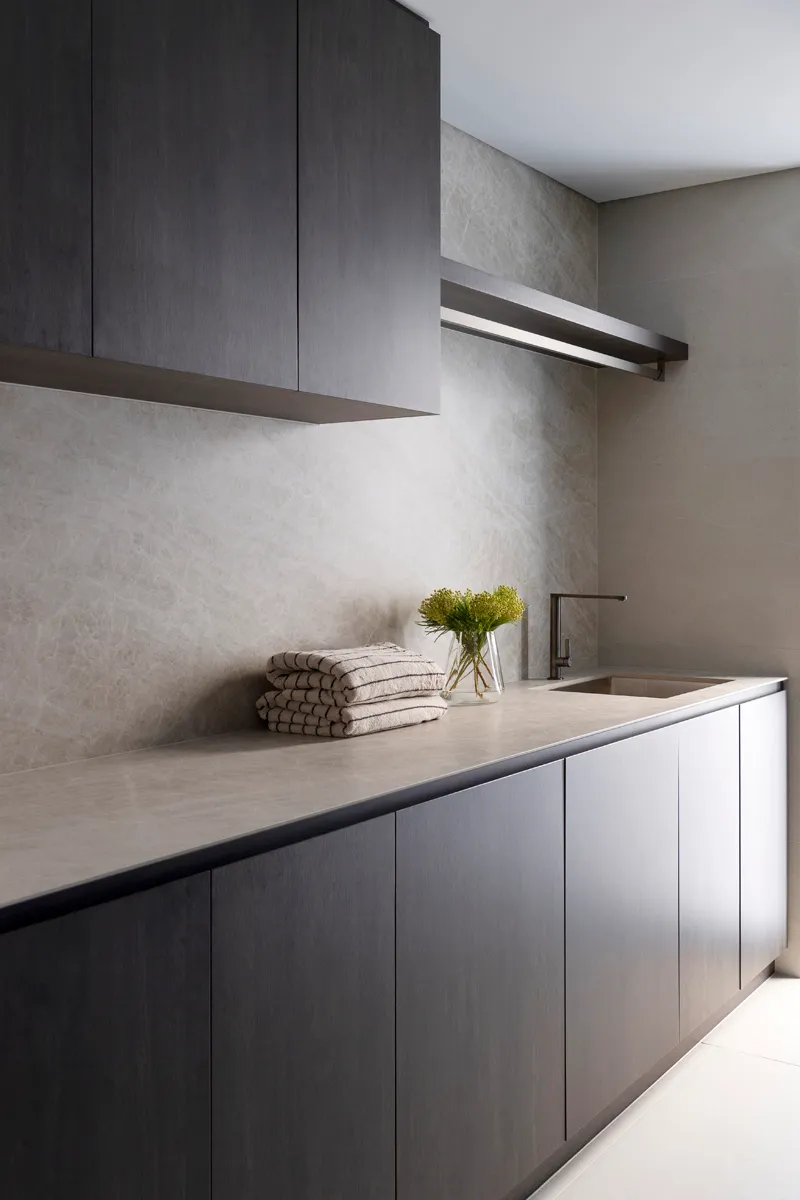
Upgrade creep is real. An extra fifty dollars a square metre on tiles, a better tap here, a stone benchtop there, and you can add ten or fifteen thousand dollars without a single decision feeling extravagant in the moment. Set an upgrade budget before you go in, and track it as you go. Budget is a boundary, not a compromise, and knowing your number is what lets you spend it where it matters.
Get the lighting and power plan right
If there is one thing people regret after moving in, it is the electrical plan.
Lighting and power are usually marked up on a floor plan during pre-start, and it is the part that feels most abstract because you are pointing at a drawing, not standing in the room. It is also the part that is most expensive and disruptive to change later.
Walk through your plan room by room and picture the day to day. Where will you actually stand to chop vegetables, and is there light falling in front of you rather than behind you. Which side of the bed needs a reading light and a power point. Where does the vacuum plug in down the hallway. How many points do you need on the kitchen bench for the way you really cook. Where do phones charge.
Think in terms of how you live, not how many points the standard allowance includes. This is where a plan that reads fine on paper either works beautifully or quietly annoys you every day for a decade.
Think in whole rooms, not single products
Selection forms are organised by category, so you choose all your tiles, then all your tapware, then all your paint. That structure makes it easy to pick each item on its own and never see the room.
The floor, the wall tile, the cabinetry, the benchtop, the tapware and the paint all have to live together. A tile you love and a benchtop you love can still compete once they are side by side. So group your selections by room, not by category, and look at them together before you sign anything. Bring your samples into the same light and check that each room reads as one considered space rather than six good decisions that happen to share a floor.
Bring your non-negotiables and your questions
Walk in with two lists.
The first is your non-negotiables, the handful of things that matter most to you, whether that is a particular benchtop, a proper walk in pantry, or enough power in the right places. Protect those first, and let the budget flex around them rather than the other way around.
The second is your questions. What is the lead time on anything you are choosing, and could it delay the build. What happens if something you select is discontinued before your house reaches that stage. Which items are provisional sums that could move once they are finalised. Asking these in the room is far better than discovering the answer in a variation notice three months later.
When it feels like too much to carry alone
Pre-start is a lot to hold. You are making the aesthetic and the practical decisions for an entire house, often in a single sitting, with real money and real timelines attached to each one. Plenty of capable people find it genuinely overwhelming, and there is nothing unusual in that.
This is exactly the situation our Pre-Start Selections session is built for. It is a half day, up to four hours, spent with you at the showroom while you work through your selections, so you are choosing with someone beside you who does this every week and can see how the decisions add up. We keep an eye on the budget, on how each room holds together, and on the choices people most often come to regret. It is $2,200 + GST, and you can book it at /book.
Whether you bring someone in or do it yourself, the principle is the same. The calm work happens before construction starts. Walk into pre-start having already done the thinking, and it stops being the hardest day of your build and becomes the day it all comes together.