Journal
What Drives Bathroom Renovation Cost in Perth
No two bathroom quotes look alike, and it is not because someone is overcharging. Here is what really drives the cost of a bathroom renovation in Perth, and where the money quietly goes.
What Drives the Cost of a Bathroom Renovation in Perth
You have started getting quotes for your bathroom, and no two of them look alike. One builder comes in low, another comes in at nearly twice the price, and the tiler you spoke to quoted something different again. You are trying to work out what a bathroom renovation actually costs in Perth, and every answer you find is a range wide enough to drive a truck through.
There is a reason for that, and it is not that someone is overcharging you. A bathroom is the most complex room in the house for its size. More trades, more waterproofing, and more small decisions packed into a small space than anywhere else in the home. Two bathrooms with the same footprint can cost very different amounts depending on choices that never show up in a photo.
So rather than give you a number that will be out of date by the time you read it, here is what actually drives the cost. Once you understand the levers, you can look at any quote and see what you are really paying for.
Whether you keep the plumbing where it is
The single biggest lever on a bathroom budget is whether the layout stays or moves.
Keep the toilet, basin and shower roughly where they are, and the plumber simply connects to what is already there. Move them, and you are into the floor, rerouting waste and water, sometimes cutting into a concrete slab. A change that looks minor on a plan can be one of the most expensive lines in the whole job.
Sometimes it is worth it. A better layout you live with for twenty years can be money well spent. But it should be a decision you make on purpose, knowing what it costs, not one that drifts in because the new vanity happened to look better on the other wall.
The work you will never see
The parts of a bathroom that matter most, and often cost most, are the parts you cannot see once it is finished.
Waterproofing done properly, to Australian standards, is not where you save money. It is the one thing standing between your new bathroom and a very expensive problem in a few years. Older Perth homes also tend to throw up surprises once the walls are open: tired pipework, rot in the framing, a failed membrane under the old tiles. A considered quote allows for some of this. A cheap quote often does not, which is exactly how a low price turns into a painful variation halfway through the job.
When you are comparing quotes, this is the invisible difference. The lowest number is not always the cheapest bathroom.
Tiling
Tiling is usually the largest single finish in a bathroom, and it moves on three things: how much you tile, which tile you choose, and how it is laid.
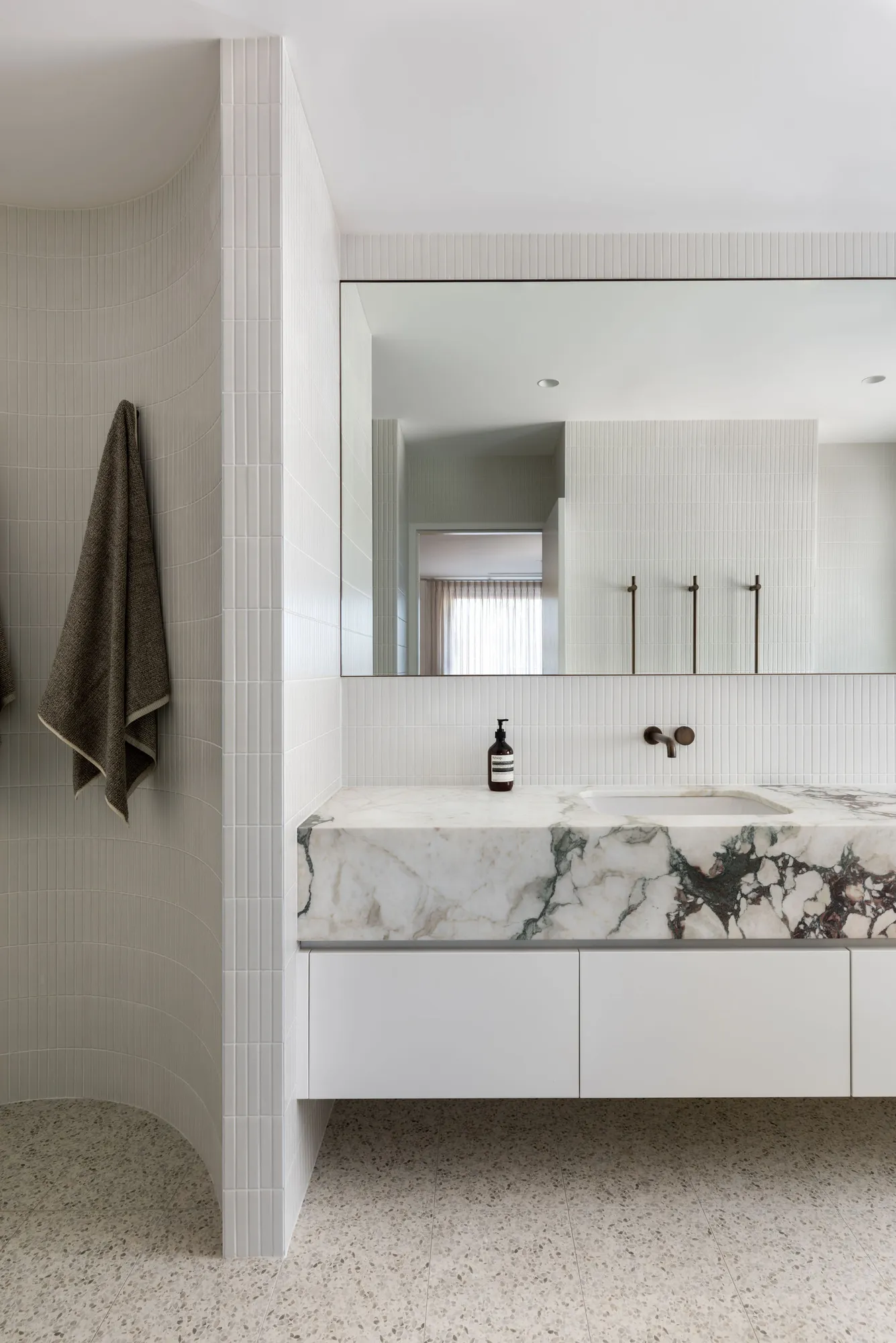
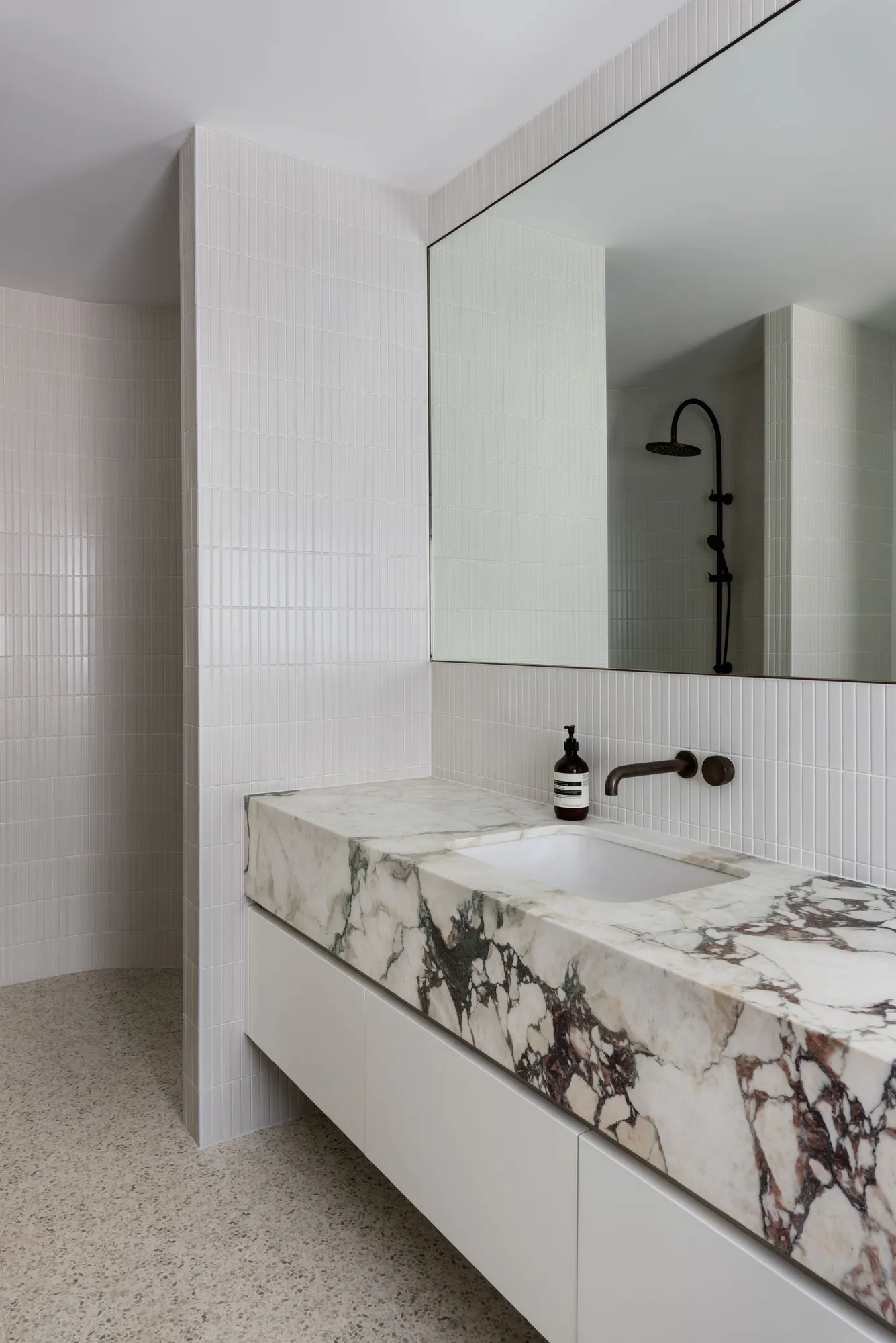
Tiling floor to ceiling costs more than tiling the wet areas and painting the walls above. A large format tile, a small mosaic, a herringbone or a vertical stack all take longer to set out and lay than a straightforward pattern, and that labour is in the price. The tile itself can be gentle on the budget or the most expensive thing in the room.
None of this reads in a finished photo. All of it sits in the quote.
Fixtures, tapware and the vanity
This is where the range is widest, and where it is easiest to lose track.
Tapware, the shower, the toilet, the basin and the vanity each come in a spread from modest to serious money, and this is the category where showrooms are most persuasive. A tap is just a tap until you are standing in front of the good one. Choosing your fixtures up front, as a group, is the difference between a budget you control and a slow creep you only notice at the end.
Cabinetry and stone
A custom vanity and a stone top will cost more than an off the shelf unit, and in a small room where storage is tight they often earn it, because every millimetre is working. Stone ranges a great deal depending on the material you pick, which is worth deciding early, because it sets the tone for the room and pulls the rest of the selections along with it.
The extras that quietly add up
Then there are the choices that each feel small on their own.
Underfloor heating. A frameless glass screen instead of a framed one. A recessed niche in the shower. Proper layered lighting instead of a single downlight. A heated towel rail. None of these are essential, and several of them genuinely change how the room feels to use every day.
The point is not to avoid them. It is to choose them deliberately, at the start, so they sit inside your budget rather than ambushing it near the finish line.
Know which project you are actually doing
It also helps to be clear about the scale of what you are taking on.
Replacing the tapware, the vanity, a mirror and the paint while keeping the existing tiles and layout is a different kind of job to stripping the room back to the frame and starting again. A lot of the confusion in quotes comes from comparing one against the other without realising they are not the same project. Decide which one you want first, and every quote gets easier to read.
Where the money is really won or lost
Here is the part most cost guides miss.
The biggest influence on what a bathroom costs is not any single product. It is how resolved the decisions are before the work starts. Changing your mind on paper is free. Changing it once the waterproofing is down and the tiler is booked is not, and a bathroom is small enough that one late change tends to hold up everything behind it.
Good bathrooms, like good renovations of any kind, are won or lost before a trade arrives on site. The rooms that come in on budget are almost always the ones where the layout, the tiling, the fixtures and the finishes were settled calmly in advance, as one considered scheme, rather than decided in a rush while the trades stood waiting.
Where a designer fits
This is the part I help with. In a Room by Room Design project, we resolve the whole bathroom on paper first: the layout, the tiling, the fixtures, the cabinetry and the lighting, chosen together so the room reads as one space and the budget is a boundary we work inside, not a surprise we meet at the end. Most of the money people waste on a bathroom is not spent on the finishes. It is spent undoing decisions that were made too fast.
If you are at the quoting stage and the numbers in front of you are not adding up, that is usually a sign the decisions underneath them are not settled yet. That is exactly the point where it helps to have someone who has done this many times sitting on your side of the table. If that is where you are, we should talk.